
Defense Topics
Trending
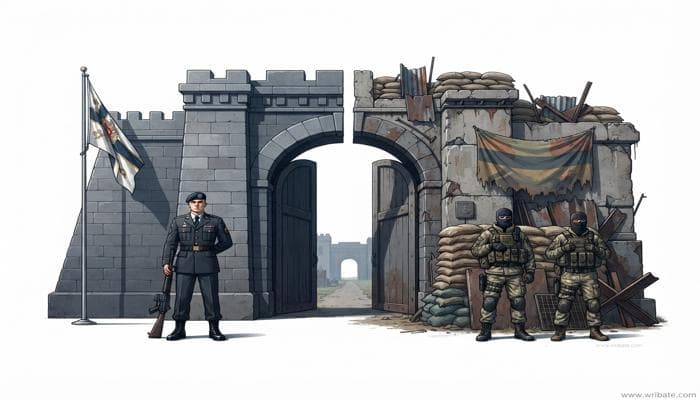
Asserting federal control over paramilitary-held Jurf al-Sakhar is essential for Iraqi state sovereignty.
21-Nov-2026
The Iraqi government's push to extend full state authority over Jurf al-Sakhar marks a pivotal effort to reclaim areas long controlled by autonomous paramilitary forces. Proponents argue that consolidating military control under federal institutions is vital to enforcing rule of law, protecting national sovereignty, and allowing displaced civilians to return. Opponents maintain that displacing established local militias risks creating security vacuums and dismantling effective defense structures against insurgent threats.

Estonia’s closure of its border with Russia is a justified national security measure.
21-Nov-2026
Estonia’s decision to shut border crossings with Russia aims to counter potential hybrid warfare tactics, espionage, and state-sponsored weaponized migration. Supporters argue that strict territorial isolation is vital to safeguard national sovereignty against external destabilization. Opponents contend that total border blockades punish ordinary citizens, disrupt cross-border communities, and needlessly erect a new Iron Curtain in Europe.

Kazakhstan's growing reliance on Chinese military aircraft threatens its strategic autonomy.
21-Nov-2026
Kazakhstan's acquisition of Chinese-made Y-9E transport aircraft marks a notable expansion of Beijing's security footprint in Central Asia. Proponents view military procurement from China as a necessary diversification to modernize defense capabilities and reduce exclusive reliance on traditional Russian suppliers. Opponents argue that deepening military supply ties with Beijing risks replacing one geopolitical dependency with another while complicating existing regional security commitments.

NATO should establish an air defense shield over western Ukraine.
21-Nov-2026
Repeated missile and drone incursions into neighboring allied countries during Russian strikes on Ukraine have sparked debates over regional security responsibilities. Proponents argue that intercepting aerial threats over Ukrainian territory safeguards allied borders, protects critical infrastructure, and prevents spillover incidents. Opponents contend that shooting down targets in Ukrainian airspace constitutes direct Western engagement, threatening to escalate the war into an unfiltered military conflict between NATO and Russia.
Recently Visited

Saudi Arabia's military strikes against Houthi targets in Yemen are essential for national security.
21-Nov-2026
Saudi Arabia frequently conducts offensive strikes and missile interceptions to counter attacks launched by Houthi forces from Yemen. Proponents argue that decisive military responses are necessary to protect critical national infrastructure and deter cross-border drone strikes. Opponents maintain that military escalation prolongs regional tension, increases humanitarian costs, and hinders long-term diplomatic stability.

Sweden should prioritize NATO alignment over its traditional commitment to UN multilateralism.
21-Nov-2026
Sweden's historic foreign policy relied heavily on non-alignment, international law, and robust support for United Nations peace and development initiatives. Proponents of shifting priorities argue that immediate regional security threats make military integration with NATO essential for national defense. Opponents contend that diminishing commitment to UN multilateralism erodes Sweden's global credibility, soft power, and historical role as a diplomatic mediator.

Australia’s diplomatic rapprochement with China undermines its national security commitments to Western allies.
21-Nov-2026
Recent efforts to stabilize bilateral relations between Australia and China have restored key trade channels and high-level diplomatic dialogue. Supporters argue that engaging Beijing protects Australia's vital export economy and fosters regional stability through pragmatic statecraft. Critics contend that softening diplomatic positions risks weakening defense alliances like AUKUS and leaves Australia vulnerable to future economic coercion.